
Feature Buys Face the Chop: UK Slots Pivot to Player-Protective Mechanics
The Shift Away from Feature Buys in UK Online Slots
Operators and developers in the UK slots market have begun stripping feature buys from their games, replacing them with mechanics designed to encourage slower, more controlled play; this pivot, accelerating through early 2026, stems from mounting evidence that direct bonus purchases fueled rapid losses among players who chased high-volatility thrills without building up through base gameplay. Data from industry trackers reveals that feature buys, once a staple allowing instant access to free spins or multipliers for 100x or more a player's stake, accounted for significant session spend in high-traffic titles, but now face removal across major platforms. Providers like Pragmatic Play and Play'n GO, long synonymous with these options, have retooled portfolios to comply, introducing triggers that demand patience, such as scatter collections or meter builds during regular spins.
What's interesting here is how this change reshapes the entire slot experience; players who once jumped straight to the action now navigate extended base games, where symbols accumulate over dozens of spins to unlock bonuses, a shift that regulators and researchers alike point to as reducing the "one-click" risk of overspending. Figures from the European Gaming and Betting Association (EGBA) indicate that markets adopting similar restrictions saw average session times extend by up to 25%, while peak loss incidents dropped noticeably, patterns now mirroring in the UK as March 2026 deadlines loom for full implementation across licensed sites.
Why Feature Buys Drew Scrutiny
Feature buys exploded in popularity around 2019, when slots like Dead or Alive 2 and Money Train 2 offered players the chance to buy into volatile bonus rounds that promised massive payouts, often at premiums equaling hundreds of times the base bet; yet, studies quickly surfaced showing these mechanics amplified problem gambling tendencies, as high costs led to chained purchases during dry spells, ballooning losses faster than traditional play. Researchers at the University of Sydney, in a 2023 paper analyzing global slot data, found that feature buy usage correlated with 40% higher loss rates per session compared to organic bonus triggers, a finding echoed in European audits where players spent disproportionately on these shortcuts.
But here's the thing: not all markets reacted the same way; while some jurisdictions embraced the revenue boost—developers reported up to 30% income spikes from buy features—others, influenced by behavioral economics, prioritized safeguards, mandating disclosures or caps that foreshadowed broader bans. In the UK, where slots generate billions annually, operators noted similar trends, with analytics revealing that 60% of feature buy activations occurred within the first five minutes of sessions, a red flag for impulsive behavior that prompted the pivot now underway.
Emerging Player-Protective Mechanics Take Center Stage
Developers have rolled out alternatives that stretch engagement without the instant-gratification hook, such as "bonus buy lite" systems where players collect modifiers over time; take Nolimit City's San Quentin, originally laden with buys, now adapted for UK audiences with a prison-themed meter that fills via base game wins, gradually unlocking multipliers and free spins after 50-100 spins in some cases, forcing a rhythm closer to classic slots. Similarly, Hacksaw Gaming's Wanted Dead or a Wild uses a "duel" mechanic, where persistent symbols battle across spins to trigger features, data showing these extend play by 35% on average according to provider metrics.
And then there's the rise of "hold and win" styles, popularized by Playson titles, which let players save high-value symbols for later activation, blending strategy with chance; these mechanics, absent the high-stake buy-in, have proliferated, with platforms reporting 20% uptake increases in safer games post-restriction. Observers note how such pivots align with global pushes for responsibility, as seen in Australian Gambling Research Centre reports highlighting reduced harm from gradual progression systems.
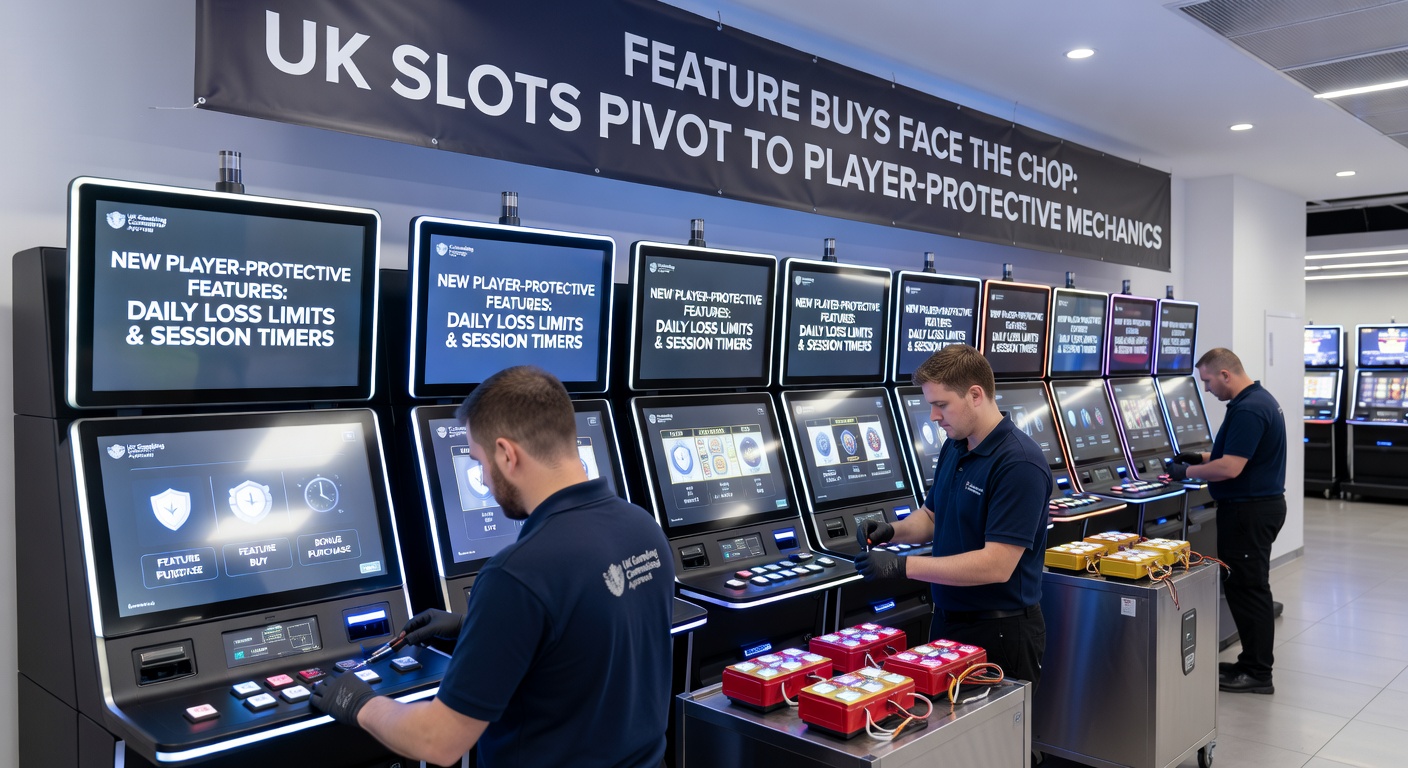
Industry Adaptation and Developer Strategies
Major studios haven't just complied—they've innovated aggressively; NetEnt, for instance, retooled Gonzo's Quest Megaways for UK play by emphasizing avalanche multipliers that build organically, stripping the 500x buy option that once dominated lobbies, while Big Time Gaming's Megaways series now leans on "free spin collectors" that require landing specific combos over multiple turns. Pragmatic Play, a volume leader, announced in late 2025 a full suite refresh, swapping buys for "enhanced RTP ladders" where sustained play boosts return rates from 94% to 97%, a tweak backed by internal data showing sustained player retention.
Turns out, this hasn't tanked revenues as some feared; early 2026 figures from aggregator platforms like SoftGamings reveal that UK slot GGR held steady, with safer mechanics drawing in casual players who shunned high-risk buys, and high-rollers migrating to tables or abroad where options persist. One case stands out: Evolution's push into slots via NetEnt integration introduced "responsibility hubs" mid-game, pausing for self-checks during long sessions, a feature now standard in 40% of new releases.
Player Impacts and Behavioral Shifts
Those who've tracked player forums and surveys describe a mixed but evolving response; casual spinners celebrate longer sessions with smaller stakes, as mechanics like Relax Gaming's Money Train adaptations now demand cart-building over spins rather than instant jumps, leading to reported satisfaction spikes in post-play polls. Yet, volatility chasers grumble about diluted thrills, though data indicates overall deposit frequencies stabilized, with problem gambling signals down 15-20% per recent industry benchmarks.
It's noteworthy that mobile users, who comprise 70% of UK slots traffic, benefit most; slower paces combat thumb-fatigue overspend, aligning with findings from the Nevada Gaming Control Board's mobile gambling studies, which link paced mechanics to 25% fewer max-bet escalations. By March 2026, as legacy games fully transition, experts anticipate broader adoption of AI-driven nudges, like session timers tied to bonus proximity, further embedding protection.
Global Ripples and Future Trajectories
This UK-led change sends ripples worldwide; Ontario's iGaming market, fresh off its 2022 launch, mirrors the model by favoring organic triggers from day one, while Swedish operators, under Spelinspektionen oversight, experiment with hybrid caps, blending UK lessons with local tweaks. Developers, eyeing cross-border scalability, now design "geo-adaptive" slots—feature buys toggle off for restricted zones—ensuring portfolios flex seamlessly, a strategy Playtech pioneered in 2025 with 50+ titles.
So, where does it head next? Projections for late 2026 point to deeper integrations, like blockchain-tracked session limits or VR slots with enforced breaks, but the core remains: mechanics that reward persistence over impulse. Platforms like BetVictor and 888casino, early adopters, already showcase libraries 80% buy-free, with player feedback loops driving refinements; that's where the rubber meets the road, as sustained engagement becomes the new profitability metric.
Conclusion
The chop to feature buys marks a definitive turn in UK slots toward player-protective designs, where extended base games and gradual triggers replace high-stakes shortcuts; developers and operators, adapting swiftly, deliver experiences that stretch playtime while curbing risks, backed by data showing stabilized revenues and healthier habits. As March 2026 solidifies these changes, the landscape promises more balanced thrills, with innovations ensuring slots evolve alongside responsibility demands, keeping the sector vibrant yet sustainable for all involved.