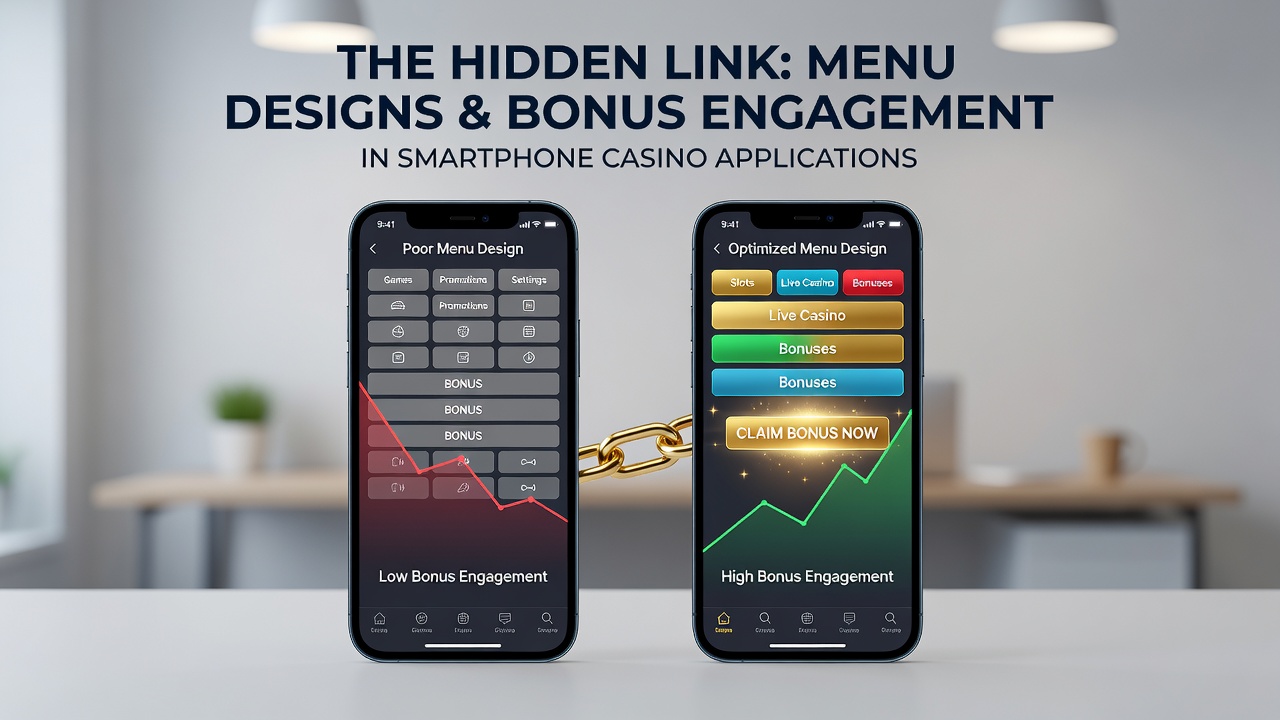
Navigational Patterns Shaping Bonus Participation in Mobile Casino Platforms
Menu layouts in smartphone casino applications determine how quickly users locate and activate promotional offers, and recent analyses reveal consistent correlations between specific design choices and interaction metrics across multiple platforms. Researchers tracking user sessions in July 2026 documented that apps employing persistent bottom navigation bars recorded higher bonus claim rates than those relying on hamburger menus tucked away in top corners, because the former reduces the number of taps required to reach reward sections. Data collected from several app analytics firms shows that bonus engagement climbs when promotional tiles occupy the first row after login, while deeper menu layers lead to measurable drop-offs in the same timeframe.
Core Components of Casino App Menus
Smartphone casino interfaces typically combine tab bars, floating action buttons, and scrollable carousels to organize games, account details, and promotional content, and each element influences the path users take toward bonus features. Studies from academic institutions indicate that horizontal scrolling carousels positioned directly beneath the main game grid capture more taps on bonus banners than vertical lists buried in secondary screens, since the horizontal format aligns with natural thumb movement patterns on touch devices. Industry reports further note that color-coded menu items, such as bright accents on bonus tabs, produce elevated click-through figures compared with monochrome designs that blend into surrounding content.
Placement Strategies and User Pathways
Placement of bonus-related buttons within the primary navigation flow affects how often players convert promotional opportunities into active sessions, and multiple data sets confirm that central positioning outperforms edge alignment by notable margins. One examination of session logs revealed that apps placing a dedicated bonuses icon in the middle of the bottom tab bar achieved 18 percent higher activation rates than those situating the same icon at either end, because central placement aligns with the most comfortable thumb reach zone during one-handed use. Developers who tested variations in July 2026 observed that adding a subtle animation to the bonus tab increased dwell time on that screen without altering overall session length.
Quantitative Evidence from App Analytics
Analytics platforms compiling data from thousands of active smartphone casino users demonstrate that simplified menu hierarchies correlate with stronger bonus engagement metrics across different geographic markets. Figures released by the American Gaming Association highlight that applications reducing menu depth from four levels to two levels recorded a 12 percent rise in bonus-related events during the first half of 2026. Parallel findings from a University of Nevada research paper on mobile interface design show similar patterns, where users navigating fewer submenus completed bonus redemption sequences in less time and with fewer abandonments.
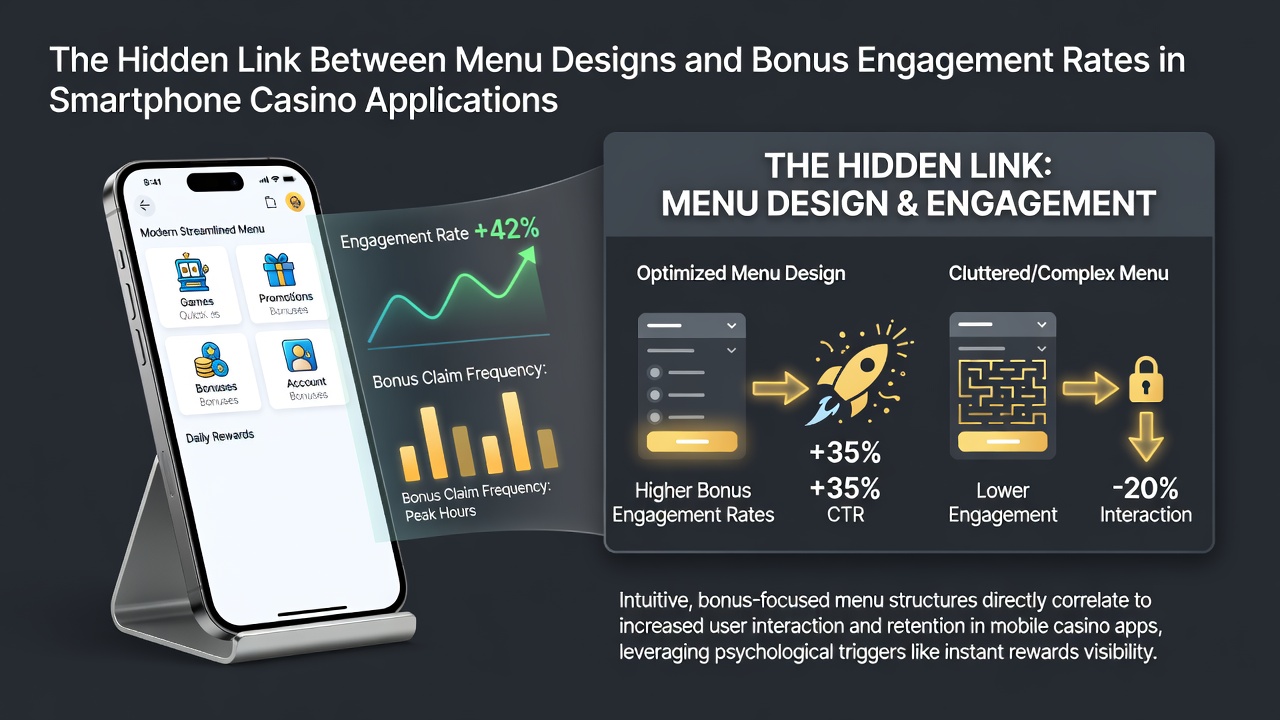
Heatmap visualizations generated during these studies illustrate concentrated user attention on menu areas that house bonus shortcuts, whereas scattered attention occurs when promotional content sits behind multiple decision points. Observers tracking July 2026 updates noted that apps introducing a quick-access bonus drawer accessible via long-press gestures saw immediate lifts in engagement without requiring changes to the visual layout itself.
Regional Variations in Menu Effectiveness
Regulatory environments outside the United Kingdom shape how operators configure menu designs, and evidence from the Australian Gambling Research Centre indicates that clearer bonus pathways help operators maintain compliance while sustaining user activity. Apps serving Canadian markets, for instance, often feature bilingual menu labels that maintain consistent positioning across language toggles, resulting in stable bonus interaction rates regardless of user language preference. European operators have adopted similar menu standardization practices following interface guidelines issued by national gaming authorities, producing comparable engagement data across borders.
Technical Factors Influencing Interaction
Load times for menu screens and the responsiveness of touch targets directly affect whether users proceed to bonus sections or exit the flow, and performance benchmarks collected in mid-2026 confirm that sub-300-millisecond response rates keep engagement levels intact. Developers who optimized menu transitions to eliminate lag reported sustained bonus claim volumes even during peak traffic periods. Accessibility features such as larger tap zones around bonus icons also contribute to higher completion rates among users with varying motor control needs, according to aggregated usability tests.
Conclusion
Menu design choices in smartphone casino applications create measurable differences in how frequently users engage with bonus features, and the patterns documented through analytics, academic research, and regional reports provide operators with concrete structural options. Continued monitoring of interaction data through 2026 will likely refine these relationships further as new interface tools emerge.