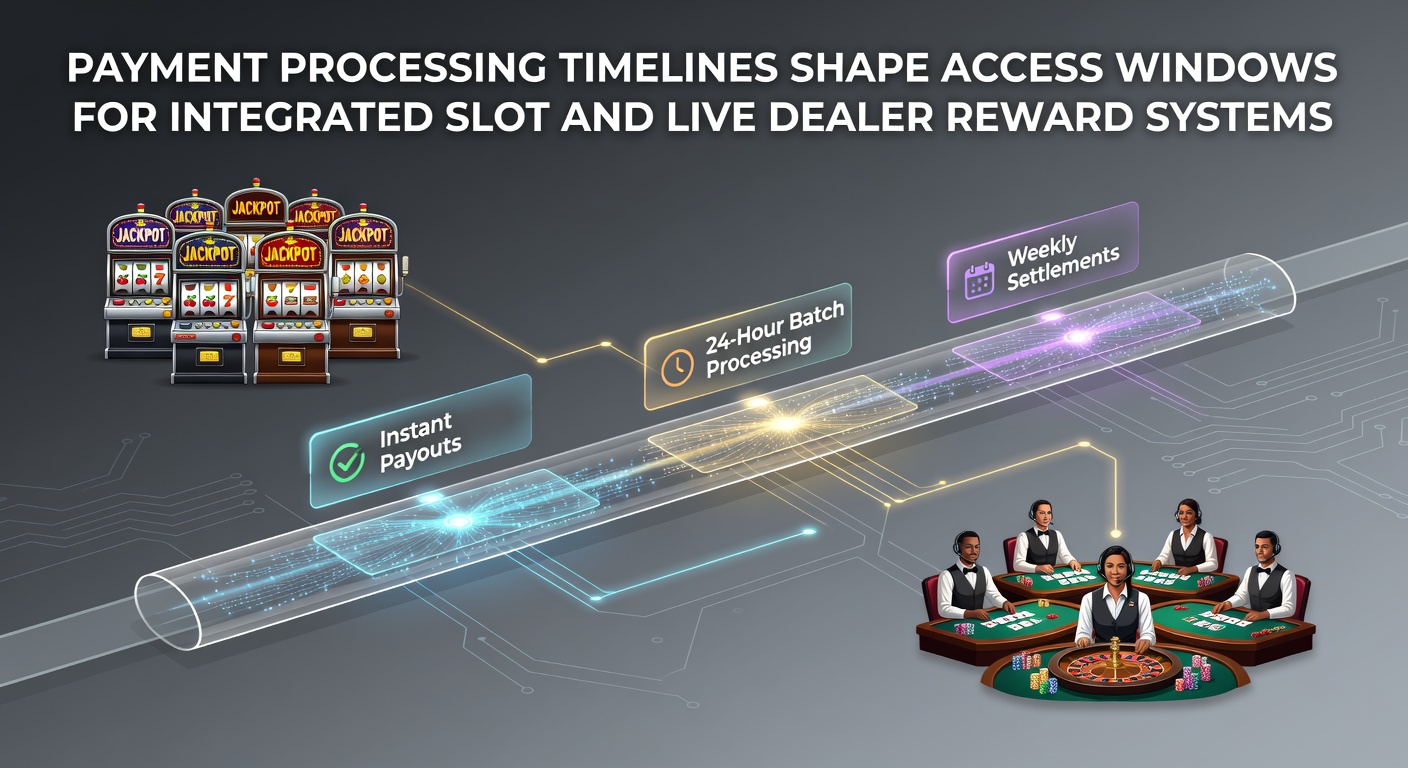
Payment Processing Timelines Shape Access Windows for Integrated Slot and Live Dealer Reward Systems
Payment processing timelines directly determine when players gain entry to combined reward structures that link slot machines with live dealer tables, and operators track these windows through automated ledgers that sync deposit confirmations with bonus eligibility periods. Systems integrate real-time transaction data so that a completed card payment opens a specific timeframe during which accumulated points convert into free spins or table credits, and delays in authorization compress those windows while faster rails extend them.
Core Mechanics of Timeline Integration
Transaction confirmation speeds vary by method, and operators map these variations onto unified dashboards that display remaining access periods for hybrid rewards, while players monitor countdowns that begin the moment a payment clears the gateway. Research from the University of Nevada Reno Gaming Laboratory shows that average authorization intervals range from under ten seconds for certain digital wallets to several minutes for traditional bank transfers, and these differences alter how quickly reward pools become available across both slot reels and dealer interfaces.
Integrated platforms use application programming interfaces to pull status updates every few seconds, which allows the system to calculate precise eligibility windows based on the timestamp of cleared funds rather than initiation, and this approach prevents premature bonus activation during pending states. Data compiled by the Canadian Gaming Association indicates that platforms employing sub-second reconciliation report higher rates of successful reward redemptions because shorter processing gaps leave wider margins before daily or session-based cutoffs expire.
Impact on Slot and Live Dealer Convergence
Slot sessions often feed progressive meters that link directly to live dealer tables, and payment timelines control the moment those meters unlock shared prize tiers, while a deposit processed after a table's betting window closes simply carries forward to the next cycle. Observers note that seamless integration requires the payment rail to complete before the slot-to-table handoff occurs, and systems that batch authorizations during peak hours sometimes force players to wait through an additional rotation of dealer rounds.
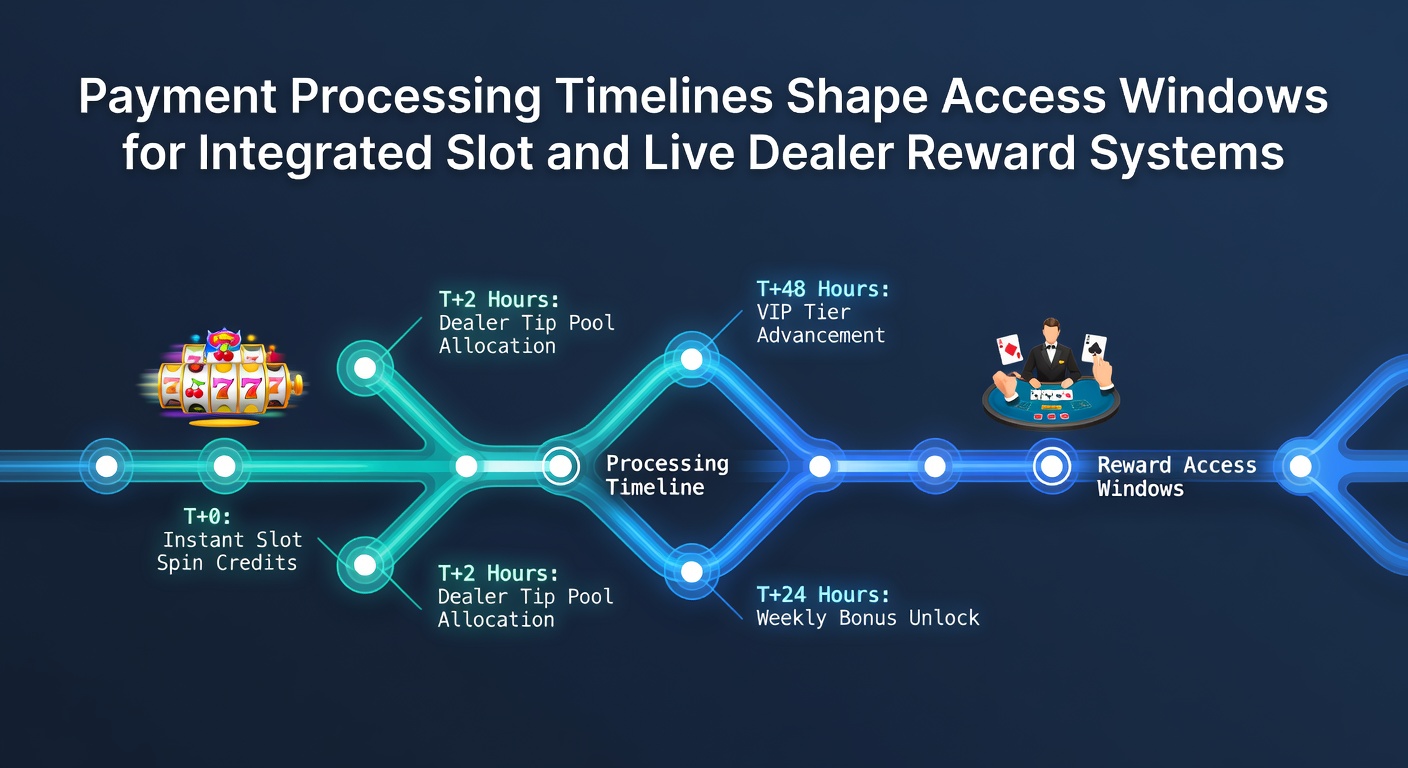
Live dealer environments add another layer because table minimums and side bets draw from the same reward ledger, and a delayed credit from an earlier slot deposit can push a player past the optimal entry point for a high-payout round. Figures released by the Australian Communications and Media Authority in June 2026 documented a measurable uptick in cross-product redemptions once operators aligned processing clocks with dealer shift changes, demonstrating how synchronized timelines expand usable access periods without altering underlying game mathematics.
Operational Adjustments and Monitoring Tools
Operators deploy monitoring suites that flag transactions nearing the outer edge of reward windows, and these tools automatically reroute slower payments to priority queues when volume permits, which preserves player eligibility across both verticals. Staff review exception reports that list every instance where a timeline breach occurred, and they adjust gateway settings or partner with additional processors to reduce recurrence rates over successive reporting periods.
Players receive in-app notifications that state the exact moment a deposit will activate combined rewards, and these alerts include projected closure times so users can plan participation accordingly, while backend algorithms recalculate windows in real time whenever upstream banks issue status changes. Industry reports show that such transparency correlates with steadier engagement patterns because participants avoid starting sessions that risk cutoff before rewards fully materialize.
Future Developments in Timeline Management
Emerging protocols aim to compress authorization intervals further through tokenized instant settlement layers, and early tests indicate these layers could shrink average windows by up to forty percent while maintaining compliance checkpoints. Regulators in multiple jurisdictions continue to examine how compressed timelines affect responsible play safeguards, and operators respond by embedding configurable buffers that prevent reward activation during mandatory cooling periods.
Conclusion
Payment processing timelines function as gatekeepers that set the boundaries for reward access across integrated slot and live dealer environments, and continued refinement of these timelines determines how efficiently operators deliver unified bonus experiences. Accurate mapping of clearance times to eligibility windows remains essential for maintaining operational consistency, and data from independent laboratories and regulatory bodies continues to guide incremental improvements in synchronization methods.